
Most employment surveys suffer from drawbacks such as limited data coverage, infrequent data collection, and time lag
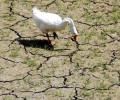
In the first of a two-part series, Business Standard examines the impact of the upcoming summer on agriculture and drinking water supply.

Indian economy about to take-off

Nifty, which has struggled around 8550-8560 levels managed to blast past this resistance and close above the psychological mark of 8600.

The broader NSE Nifty closed below the 10,600 mark by plunging 98.15 points, or 0.84 per cent, to 11,582.35 after shuttling between 11,567.40 and 11,751.80.

Indrani Mazumdar ' Mumbai April 23, 2015 Last Updated at 15:57 IST Stock Tips for Tomorrow Subscribe, Know which stocks to buy Tomorrow only Profitable Stock tips www.live-market-tips.com/Tomorrow Ads by Google Add to My Page Tiny URL RELATED NEWS Markets end flat after paring gains; HDFC Bank down 1.6% Sensex, Nifty extend losses; TCS, L&T down 2% Sensex gains over 100 points; Wipro surges nearly 6% Sensex, Nifty up 1%; bank shares zoom Nifty slips below 8,400 mark; HDFC down over 1% Hiranandani Properties Prices Starting at Just 15 Lacs. An Excellent Opportunity. Visit Nowhouseofhiranandani.com Aviva Term Plan Get 1 Cr Life Cover @Rs 16*/day. High Protection at Minimal Cost!avivaindia.com/Term-Insurance Ads by Google Markets ended lower on Thursday despite the clarification on minimum alternate tax by the government while a weak monsoon forecast raised concerns about an uptick in inflation. Further, investors turned cautious ahead of fourth quarter earnings from Infosys while worries about Greece also dampened sentiment. Meanwhile, rating agency Moody's today said emerging economies in Asia Pacific region, including India, have a high degree of immunity to external shocks, but will face challenges when the US Federal Reserve begins raising interest rates. The 30-share Sensex dropped 155 points to end at 27,735 and the 50-share Nifty shed 31 points to close at 8,398. MARKET VIEW "The last 6 out of 7 days, we have witnessed an extreme bout of selling in the key indices and stocks. Every rise getting sold and Bulls coerced to give in recently, with key supports breached. Today, was no different day, where volatility was extreme. We believe that the approach to the market remains cautious. If the indices break the previous low and close below that (i.e. 8270), then it could trigger a short term correction. Else, this could very well be termed as a bounce off the support levels. However, for a new trend to begin, Banknifty has to break 19000 levels. " said Kunal Bothra, Head -Advisory, LKP. ECONOMY The clarification from the Indian government that it would honor tax treaties while making a demand of Minimum Alternate Tax (MAT) at the effective rate of 20 per cent came as a relief for favorable treaty nations. But, dilemma still hangs over funds from other nations whose treaties do not grant an exemption from capital gains. The first monsoon forecast by the Indian Metrological Department (IMD) has predicted below normal rainfall during the season for the second straight year in 2015 primarily due to the build-up of El Nino conditions in the Pacific Ocean. Disruptions in the normal rainfall is likely to put further pressure on the agriculture sector which is already reeling under the impact of unseasonal rains that have damaged crops in parts of country and may lead to higher food inflation making further rate-cuts by Reserve Bank of India less likely. KEY STOCKS On the sectoral front, BSE Healthcare, Auto, Capital Gods, Oil & Gas, Realty and Power indices are trading lower up to 1%. However, BSE Consumer Durables and Metal indices are trading higher by 1% each. Metal stocks ended firm in today's trade after Bank of America-Merrill Lynch said the sector's return on equity will double by FY17 end. The research house reinstated coverage on Indian steel makers, with "buy" ratings on Tata Steel, SAIL, JSW and Jindal Steel and Power. Tata Steel gained 5%. Vedanta (earlier known as Sesa Sterlite) climbed nearly 0.5% and Hindalco was up 0.2%. Coal India advanced 1.3% after Brokerage firm CLSA maintained its 'buy' rating on the stock. YES Bank ended higher by 7% on the National Stock Exchange (NSE) on back of heavy volumes after the private sector lender said that its board approved a proposal to increase foreign institutional investor (FII)/foreign portfolio investors (FPI) limit to 74% from the existing limit of 49% of the paid-up share capital. According to media reports, Maruti Suzuki has plans of launching a series of new cars for the Indian market in 2015. Unveiled at the 2015 Geneva Motor Show, the Maruti Suzuki YRA model will be named as 'Fronx' for the Indian market. The stock was up 1%. TCS ended the session with marginal gains after the company teams up with Solace Systems team to deliver digital Reimagination solutions and services. Select IT shares remained under pressure for the seventh straight session over concerns about quarterly earnings. Infosys shed over 0.7% ahead of the quarterly earnings due tomorrow and Wipro lost nearly 2%. According to reports, M&M is planning to invest Rs 2,500 crore in expaniding its existing auto manufacturing facility in Telangana., which will increase its capacity to 1.5 lakh vehicles per year. The stock slipped over 1%. On the concern of poor monsoons ahead of the June-to-September monsoon season, auto, financials and FMCG stocks ended lower. ITC was down 0.3%, Tata Motors lost over 2%, Hero motocorp shed 1%, HUL slipped 0.6%, SBI dropped 2.4%, Axis Bank and ICICI Bank dipped 0.3% each. HDFC Bank lost 0.4%. HDFC Bank posted a 20.6% rise in net profit in the fourth quarter ended March 31, 2015 due to a higher loan growth. The bank had a net profit to Rs 2806.91 crore for Q4 compared to Rs 2,326.52 crore in same quarter previous fiscal. The number of new launches in residential real estate has come down by 55 per cent in the first quarter this year owing to subdued sales, according to a report. From the realty pack, Unitech, IB Realty, Godrej, Anantraj, HDIL and NBCC were down up to 2%. In the broader market, BSE Midcap index outperformed the peers and was up 0.6%. However, BSE Smallcap index lost 0.2%. Market breadth ended lower with 1,434 declines versus 1,377 advances. Read more on: Nifty ' Sensex ' Nse ' Bse ' Maruti ' Tcs ' Infosys ' Yes Bank ' Hdfc Bank ' Tata Steel Read More Sensex drops 189 points to end below 28,000 Provisionally, the 30-share Sensex ended down 189 points at 27,701 and the 50-share Nifty shed 39 points to close at 8,391 Add to My Page Tiny URL Recommended for you Monthly SIP Investments Invest as low as Rs 1000pm in Top SIPs in just 2mins. Start a ZipSip. www.myuniverse.co.in/ZipSip Luxury 2 & 3 BHK Mumbai Pay 10 lacs now, Rest on Possession 63 Storey Twin Towers in Kandivali lovealpine.com/Special-Offer Ads by Google Advertisements Prof. Mikkel Draebye explains the importance of corporate entrepreneurship. Read More Plan a vacation to unveil the dense wildlife at Tadoba. Buidling a smarter India with our contribution of new automation. Get up to 5 years of onsite warranty & great discounts. Know more Zero Account Opening Fees. Click here to know more $ Daily One Sure Intraday Stock Tip. Get Profit by 11:30 AM @ 0988877963 Leaders should be responsible for organisation and co-workers. "Prof. Massimo Magni" Unveil the marvellous hill stations of Maharashtra Back to Top Quick Links Go LATEST NEWSAll NewsIn This Section Nifty ends shy of 8,400; YES Bank top gainer PDP-BJP coalition govt a change for the worse: Omar Abdullah Arms case: Salman Khan fails to appear in court for recording statement MRF Q2 net surges 95% to Rs 333 crore Banking sector fraud has gone up by more than 10%: Deloitte Building leadership, capabilities in big data labs critical for analytics: Nasscom YES Bank extends intra-day gain on board nod to hike FII/FPI limit to 74% Gammon India to issue Rs 100-crore debentures to promoters Smart maps an $8 bn opportunity for India: Study Exercise financial prudence: Parrikar to Armed Forces News you can use Rss icon Don't reduce PF contribution What is Gratuity? What are NEFT and RTGS? Check your Income Tax Credit credit status form-26AS online Saving capital gain tax on sale of property Calculate tax on your house property income How to Check your EPF Balance & status online Featured Videos Why some of Japan's elderly want to go to jail video The 1341hp electric car beats a Bugatti video The maps that tell you when it's safe to breathe video How to add Michael Jordan's shoes to your portfolio video MOST POPULARReadSharedCommented BK Birla group plans mega recast Samsung to set up $100-mn plant in Hyderabad Rains seen below normal for 2nd straight year Jet Airways puts its wide-body fleet on sale to reduce debt FIIs with tax pact shield may be exempt from MAT Market News Signs of steel prices bottoming out a ray of hope for steel players CNX Metal index that fell to one-year lows of close to 2,293 in mid-March now trading at 2,460 levels Markets under pressure; Sensex slips below 27,800 The auto and capital goods space are exerting pressure on the indices in noon trades. Ashoka Buildcon dips after pricing QIP issue at discount The board has approved issue of 2.84 crore shares to Qualified Institutional Buyers at Rs 175.80 per share Cardamom rises by 0.4% as demand picks up Speculators created fresh positions at prevailing levels, taking positive cues from spot market on pick up in demand Crude palm oil falls by 0.1% on sluggish demand speculators indulged in reducing positions due to subdued demand in spot market The 30-share Sensex dropped 155 points to end at 27,735 and the 50-share Nifty shed 31 points to close at 8,398.


New age technology will reshape India's future.

Ajit Balakrishnan rewinds to a decade when mobile phones were unheard of and when an IIM degree had a different purpose and value.

He endorsed transparency and financial stability in addition to issues related to inclusive growth and development, write Puran Singh and Nupur Pavan Bang.

The Hindutva brigade's silence on the rape may possibly be explained that this incident is an intra-Hindu affair for them. What is even more intriguing is that vocal gender activists have preferred to almost ignore the incident. Why? Is it because homosexual rape does not involve the woman either as victim or as aggressor, asks Mohammad Sajjad.

'Relations between India and Japan are robust and devoid of either shadow of history or any irritant.' 'In fact, there is plenty of warmth and goodwill earned over history. There are no negatives but only opportunities,' notes Dr Rajaram Panda.

What are the most worrisome aspects of climate change for India? Can they be solved?

The ordinance has returned near absolute power of discretion in land acquisition, except in tribal areas, into the hands of the bureaucracy yet again

Moving ahead with their new mantra -- Chalein Saath Saath: Forward Together We Go -- Prime Minister Narendra Modi and United States President Barack Obama on Tuesday vowed to deepen cooperation in every sector for the benefit of global stability and people's livelihoods over the next ten years.
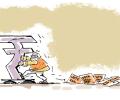
'The economy may not improve unless you admit there are some problems.'

After helping the government in policymaking since October 2014, Chief Economic Adviser Arvind Subramanian is returning to academics and will be teaching at Harvard Kennedy School on a visiting position. In an interview to Dilasha Seth and Somesh Jha, he says the ease of doing business agenda needs to move forward and India must try to integrate with the global value chains. Edited excerpts.

A delayed monsoon and abundant cotton in the international market could spell trouble in the state's suicide zone.

Growth in the eight core sectors jumped to 8.5% in April, due to a sharp pick-up in refinery products and a commensurate rise in electricity generation.

What is Change really like in Bihar? Once seen as India's basket-case, what is its turnaround story like?

President Pranab Mukherjee on Monday addressed the first joint sitting of Parliament as mandatorily required under the Constitution after the general elections. The address is the political, economic and foreign policy road map of the Narendra Modi government and covers virtually all crucial areas.

Drones are being sold by e-retailers like Flipkart and Snapdeal for less than Rs 40,000 apiece.

Here's the full text of Prime Minister Narendra Modi's address to the United States Congress.

Unless the judges factor in the ungovernability of technologies and their beneficial owners, present and future Presidents, prime ministers, judges, legislators and officials handling sensitive assignments may become redundant with reference to their age-old roles for securing 'national resources and assets', warns Dr Gopal Krishna.
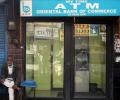
The longer it takes for RBI and the government to stabilise monetary conditions in the economy, the more severe and long lasting will be the damage caused to various sectors of the economy, especially to the informal sector, says Rajeswari Sengupta. Rajeswari Sengupta discusses the impact of this move on money supply, output and prices, in the short- and medium-term.

'Khadi is my passion. The only idea behind this start up is to promote and popularise khadi.'

Mohandas Pai took part in an hour-long chat on rediff.com

In an interview with Shobha Warrier/Rediff.com, he talks about the economic policies of the Narendra Modi government and whether achche din is really coming.

What is Change really like in Bihar? Once seen as India's basket-case, what is its turnaround story like? Archana Masih reports from India's other most talked about state.

A group of retired civil servants also called upon the PM to reach out to the families of the victims in Unnao and Kathua and "seek their forgiveness on behalf of all of us".

ITC is one of those few enterprises in the world that has traversed a 100 year journey and has yet managed to remain contemporary, relevant and competitive.

The industry players couldn't hide their disappointment.

Bank credit growth, still sluggish, could see a rise if the Reserve Bank of India decides to cut interest rates, believes Ashima Goyal.

Indian Prime Minister Narendra Modi who envisioned Make In India last September was at his eloquent best as he made a fervent plea to global businesses to come Make In India.
.jpg)
We present Prime Minister Manmohan Singh's full speech as he addressed the country on the occasion of 66th Independence Day, from Red Fort, Delhi.

'India is no longer the India of the '70s and the '80s.' 'It's a large country with the fastest growing economy.' 'In working with India, you just can't go and humiliate the nation publicly.' USIBC President Mukesh Aghi tells Aziz Haniffa/Rediff.com about how he advises American companies to do business with India, what he thinks of Modi's government and the way forward for the India-US relationship.
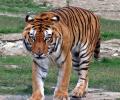
'We are rushing to 'develop' without carefully valuing natural areas.' 'With careful land use planning and scientific zonation at least 5 to 10 per cent of the country's land can be secured for tigers and other such species, and another 5 to 15 per cent kept under low-impact uses to support biodiversity that can coexist with human uses.'
